"This channel isn't driving conversions." You cut the budget on a channel that looked like that on the dashboard — and somehow total revenue fell too. The culprit may be last-click, a way of counting revenue. Last-click assigns the entire sale to the single touch right before purchase. It's simple and easy to report, but it writes off the touches that created the demand upstream, counting them as zero. This guide explains why last-click misleads budget decisions, how to act instead of just criticizing it, and how to read channels revenue-first.
Table of Contents
TL;DR#
-
Last-click assigns all revenue to the final touch
Only the channel touched right before purchase gets credited; everything before it counts as zero
-
Upstream demand-creating touches get underrated
Social or video that introduced the product looks like "no conversions," and cutting it drops search conversions too
-
Criticism alone doesn't move you forward — pair it with action
Don't stop at "last-click is bad"; keep a simple alternative that ranks channels by real revenue
-
Also ask buyers where they heard about you
Touches that never register as clicks — AI search, review sites — can be recovered with a one-question survey
1. What last-click attribution is#
Bottom line: last-click assigns 100% of a sale to the single touch right before purchase.
Attribution (how you assign a sale's credit across touches) comes in several models. The most widely used is last-click.
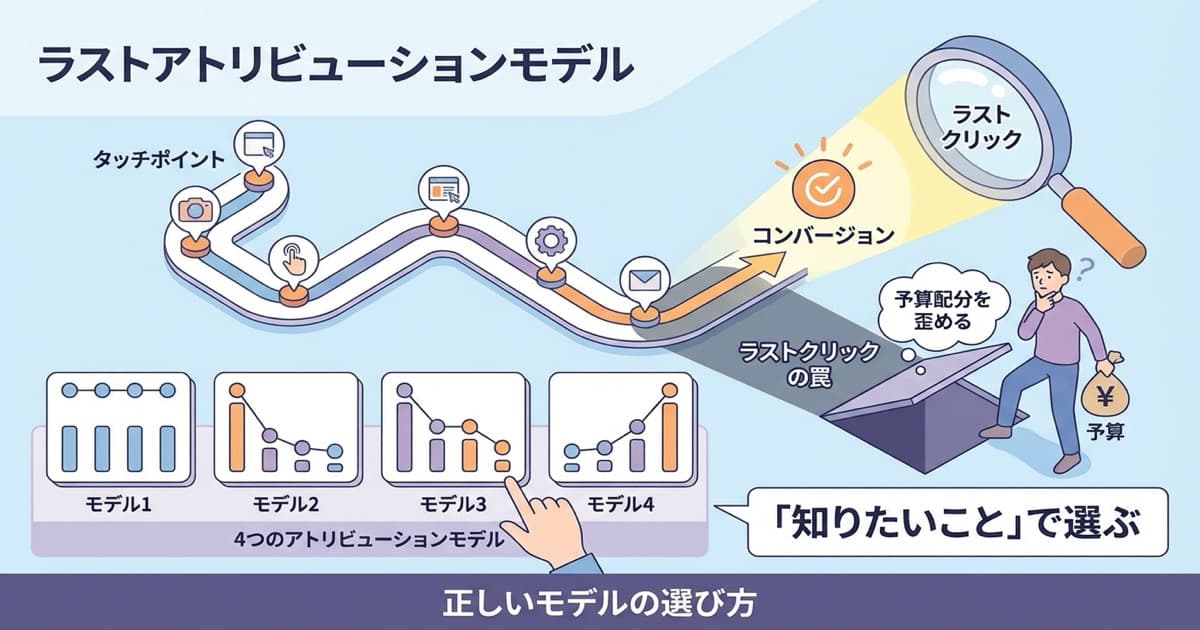
Last-click gives 100% of the revenue to the last touch a customer clicked before buying. If someone discovers a product through a social ad, then buys days later via a search ad, all the revenue becomes the search ad's result. The social ad that first introduced the product is counted as zero.
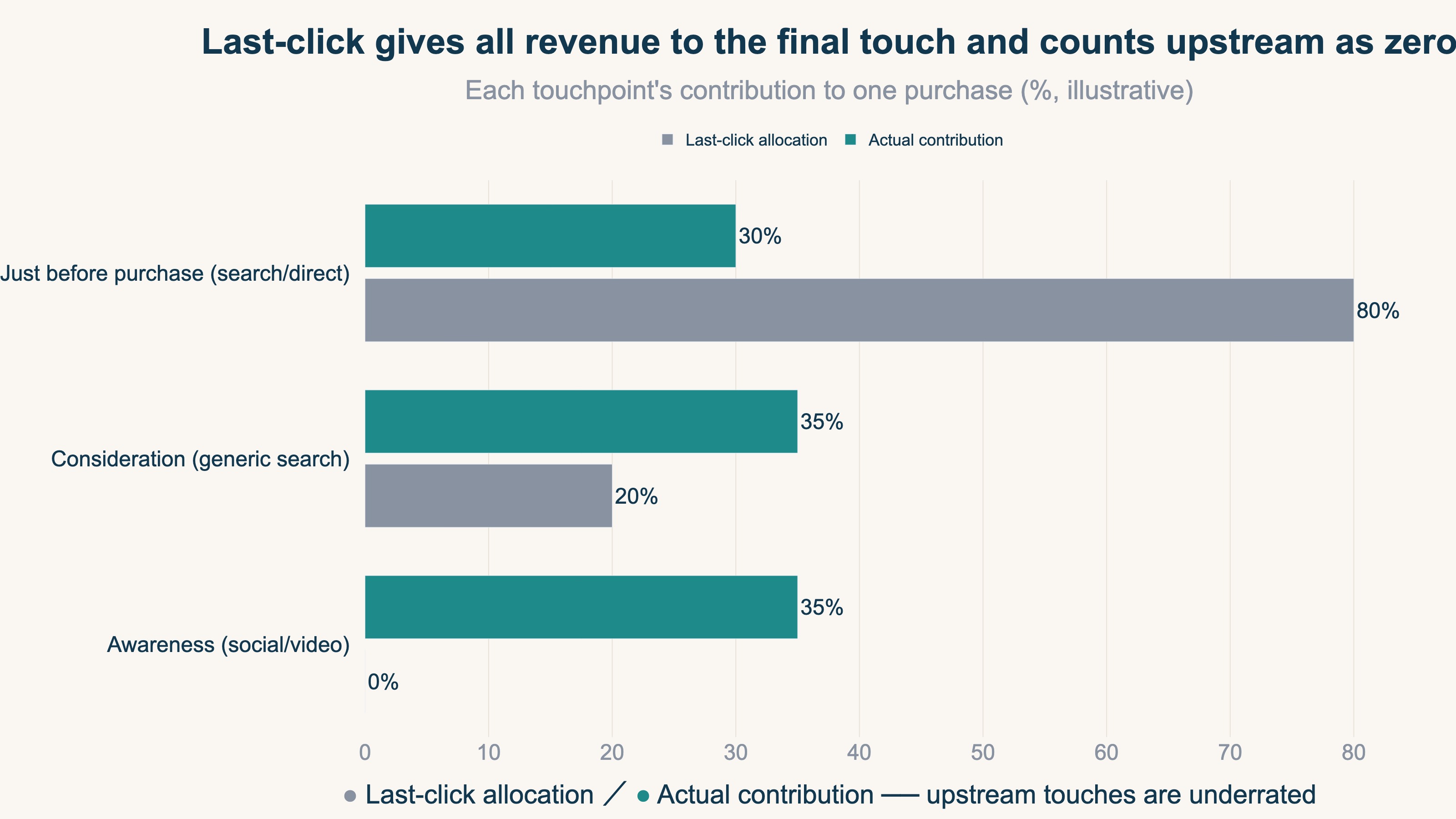
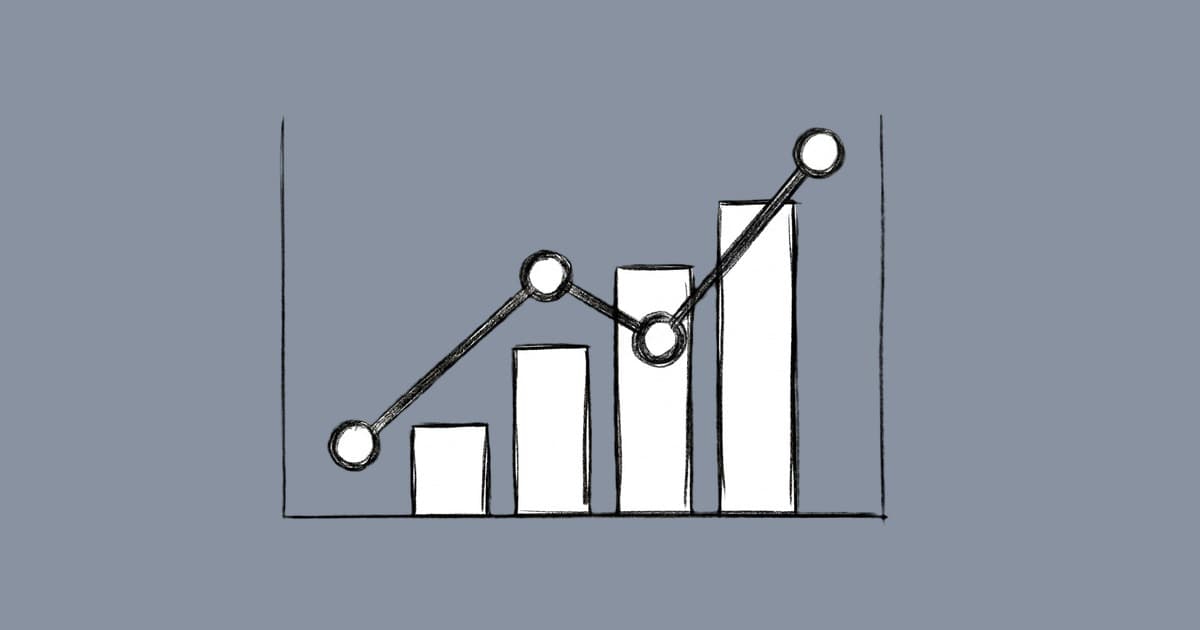
The key point is that last-click is just one of several ways to look at this. Look at the chart above: Google search, the biggest under last-click, shrinks when you view it by the first touch ("first-click"). Social and video become the largest contribution instead. Which model you use can flip how a channel is judged.
Last-click is popular for good reasons: it's simple to set up, the reports are clear, and it's easy to tell finance and leadership "this channel sold this much." Those are real operational strengths, and not something to dismiss. The problem is deciding budget increases and cuts on this view alone.
2. What you lose by moving budget on last-click#
Bottom line: cut an upstream touch that creates demand as "zero result," and you lose the sales that would have followed.
Last-click's biggest trap is overlooking the touches that built demand before purchase. Customers don't search and buy out of nowhere. They learn about a product somewhere, get interested, then search and buy. That "spark of awareness" is exactly what last-click counts as zero.
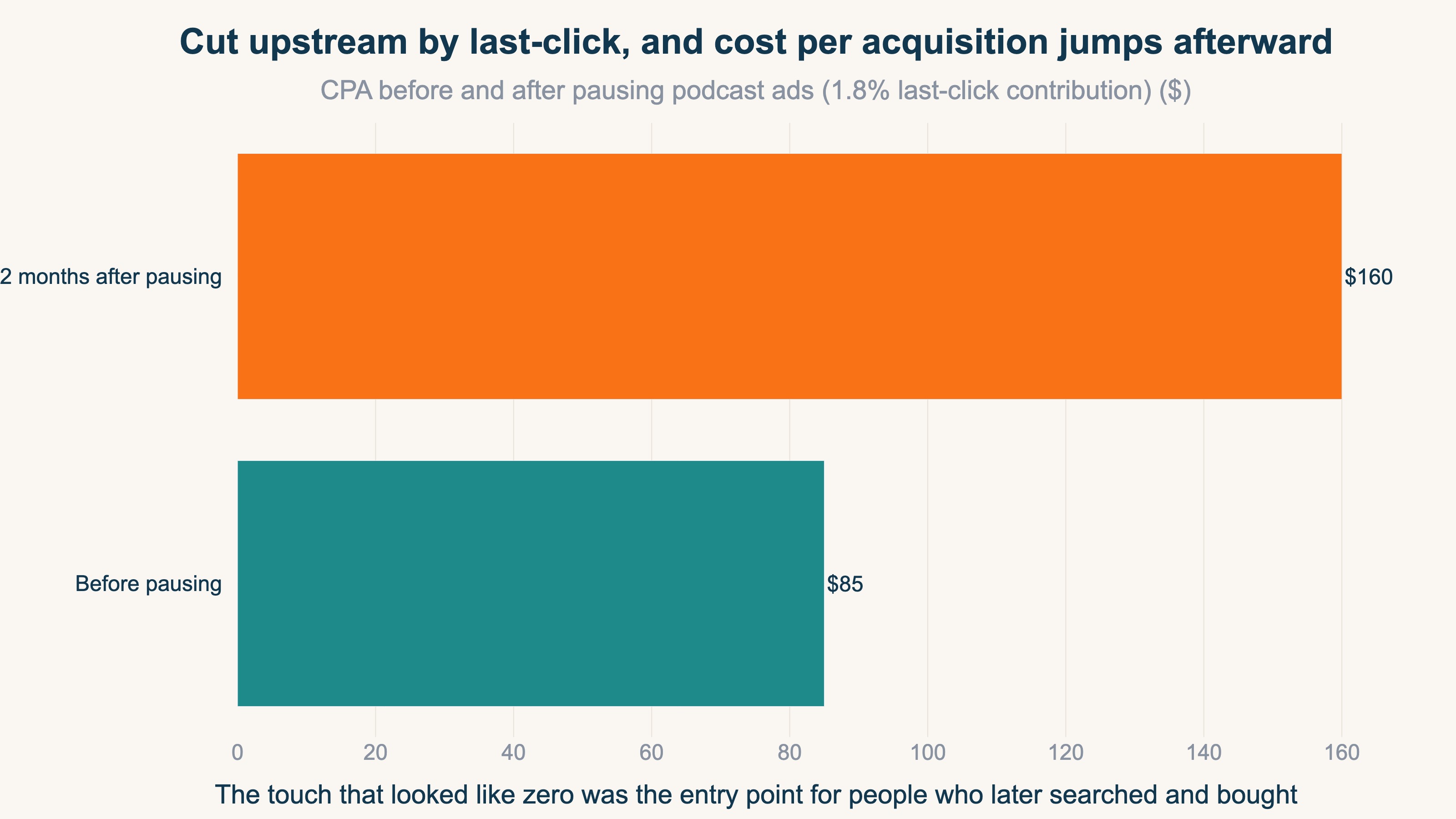
Here is a real case. One brand cut its podcast ads, on which it spent $40K a month, because in last-click they drove only 1.8% of revenue. Two months later, cost per acquisition (CPA) rose from $85 to $160 — nearly double. The "awareness spark" the podcast created disappeared, and fewer people searched and bought afterward.
Pause podcast ads (reason: 1.8% last-click contribution)
 → 2 months later: CPA $85 → $160 (about 2x worse)
What happened is a classic error: "a touch that looked like zero result was actually the entry point for the whole journey." Move budget on last-click alone, and you may protect visible conversions while drying up the demand that fed them.
3. Act, don't just criticize: how to read it#
Bottom line: don't stop at criticizing last-click — rank channels by real revenue, and ask buyers directly when needed.
A caution here. Just saying "last-click is bad" solves nothing. In practice, the common complaint is "I hear the criticism, but no one tells me clearly what to use instead." Sophisticated statistical models are expensive and hard to deploy. So you need a realistic, simple set of moves.
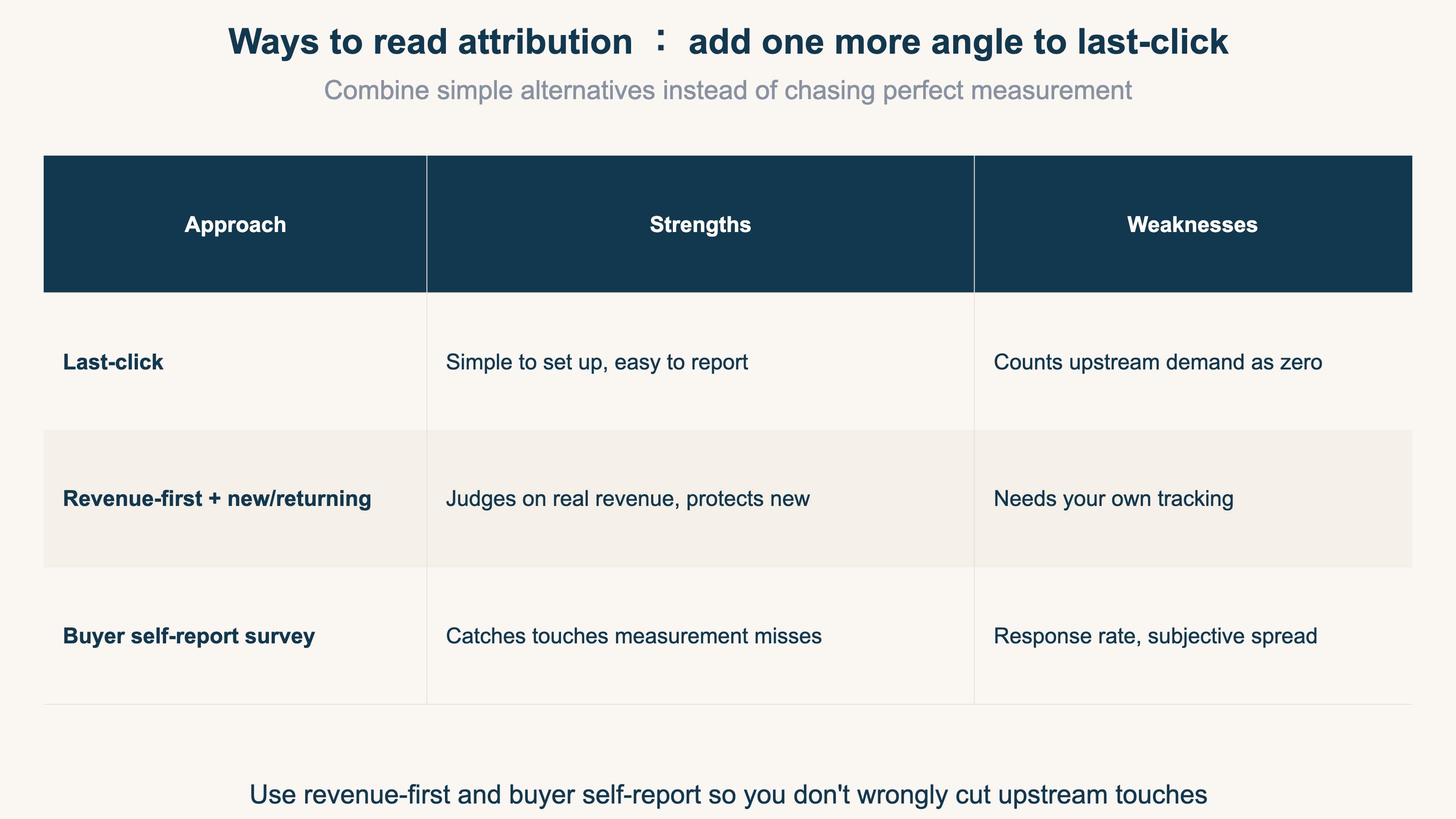
The idea is simple.
- Switch attribution models: don't stop at last-click — view the same revenue under other models like first-click to check the upstream contribution
- Rank channels by real revenue: align your own actual revenue by channel, not each platform's self-report
- Split new from returning: separate whether visible results are new-customer acquisition or returning-customer re-engagement
- Ask where they heard about you: add one question at checkout — "how did you hear about us?" (self-reported attribution)
Asking directly helps as a supplement now that AI search, review sites, and other touches increasingly can't be measured as clicks. But responses vary, and it can't tie which touch produced how much revenue. And the real work isn't doing this once — it's repeating it every time a channel or campaign changes. The idea is simple, but it gets heavier the more you do it by hand.
RevenueScope solution
Last-click writing off upstream, and criticism alone going nowhere, share one root: you are locked into a single attribution model, so the upstream contribution disappears from view.
GA4 does show revenue by channel. But comparing that same revenue across different models — to see how the upstream contribution changes — means rebuilding an exploration report, which is structurally heavy work.
RevenueScope lets you switch the same revenue data across last-click, first-click, linear, and time-decay models with one click. And it does so on clean numbers with bots removed, aligned on one common yardstick: RPS (revenue per session). So a reversal like "the social channel that looked tiny under last-click was actually the biggest entry point under first-click" shows up on the spot.
On top of that, RevenueScope lets you split each channel's revenue by new versus returning. You can check whether an upstream touch that surfaced under first-click is genuinely bringing in new customers — the "substance" that switching models alone can't reveal. So you avoid cutting upstream on the last-click number alone.
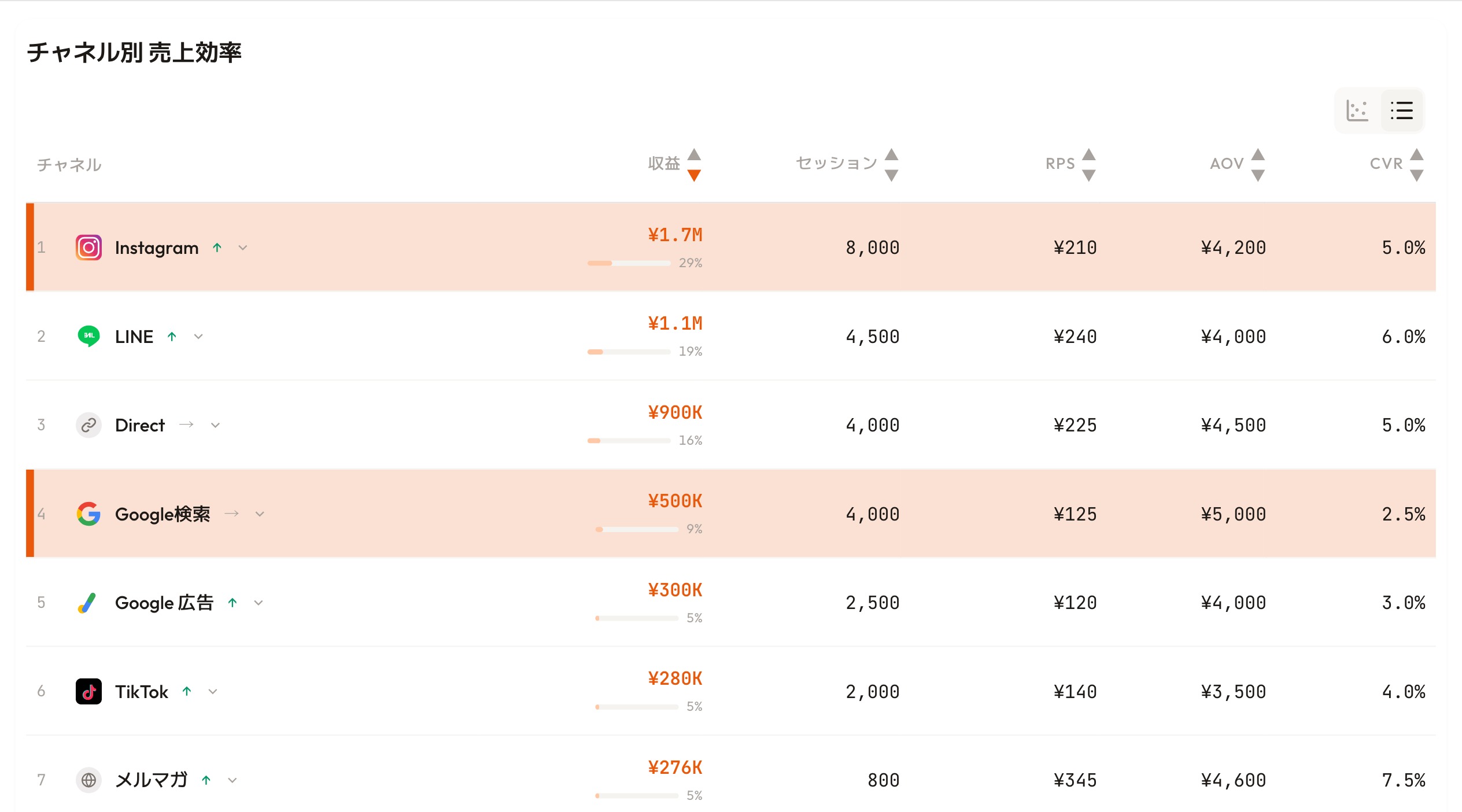
RevenueScope dashboard (demo data shown). Every channel lines up on one common yardstick; switch models to check how each touch's contribution looks.
The screen above lines up every channel on one common yardstick like RPS. Google search (RPS ¥125), which tends to close, and Instagram (RPS ¥210), which creates upstream demand, sit on the same footing. Review this same data by switching models and splitting new versus returning, and you can judge "which touches are truly worth protecting" with concrete numbers. That is far more practical than building a perfect measurement model from scratch.
FAQ#
Frequently asked questions#
Q. Should I stop using last-click?
A. No. It has real strengths — simple to set up, easy to explain to finance. The problem is deciding budget changes on last-click alone. Use it as a daily guide, but add a revenue-first view or a buyer survey when making allocation decisions.
Q. Do I need to deploy a complex attribution model?
A. Not at first. Statistical methods are expensive and hard to deploy, and teams often can't operate them. Just aligning your own actual revenue by channel and splitting new from returning already covers much of last-click's blind spot.
Q. Does a "how did you hear about us" survey actually work?
A. Yes. As touches that can't be measured as clicks grow — AI search, review sites — asking buyers directly is getting renewed attention. A single question on the order-complete screen surfaces upstream touches that measurement misses. That said, responses vary and can't be tied to how much revenue each touch produced, so use it as a supplement and pair the decision with a revenue-based view.
Conclusion#
Last-click assigns all revenue to the touch right before purchase. It's simple and easy to explain, but it writes off the upstream touches that created demand as "zero result." Move budget on this alone and you can dry up the source of your visible conversions — as in the brand whose CPA doubled after cutting podcast ads.
What matters is having a move, not just a critique. Rather than building a complex model from scratch, switch between models, rank channels by real revenue, and split new from returning — and ask buyers directly when needed. As a first step, take your main channels and review their real revenue from an angle other than last-click. The "touch that looked like zero but was actually the entry point" tends to show up.
See which ads actually drive revenue, at a glance
Free up to 5,000 sessions/month, AI analyst included. No credit card required. Up and running in 5 minutes.
References#
- Google Analytics "Get started with attribution" 2024
- Google Ads "About attribution models" 2024
- Google Analytics "About data-driven attribution" 2024